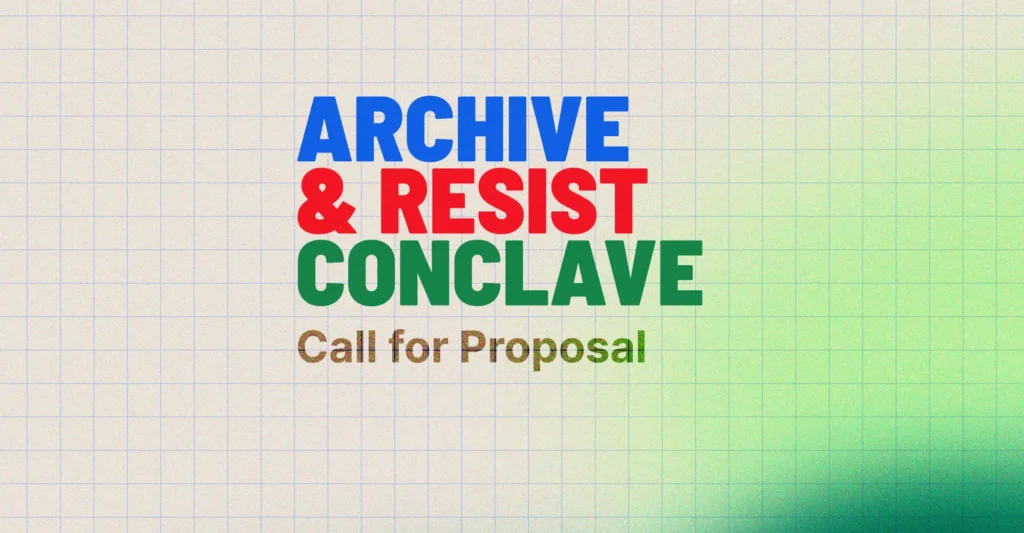
The Call for Proposals for Archive & Resist Conclave 2026 is now open!
This unconference-style conclave will take place in Dhaka on January 26–27, 2026. If you are interested in hosting a session beyond attending as a participant, this is your opportunity to propose one.
🗓 Submission Deadline: 06 January 2026
The call for general participants will be published soon, along with session details and other information. This call is only for those who wish to co-host a session, workshop, or any other collaborative activity.
First, What Is an Unconference?
An unconference is a participant- and community-driven event where attendees actively shape the agenda. Unlike traditional conferences with pre-set speakers and panels, unconferences prioritize collaborative, peer-to-peer learning.
Participants can propose topics, lead discussions, share skills, and respond to emerging needs in a flexible and informal setting. The emphasis is on collective knowledge rather than one-way presentations, making unconferences highly dynamic and relevant. This format is widely used in tech, education, activist, and community spaces.
Key Characteristics of an Unconference
- Participant-Led: Attendees propose topics, facilitate sessions, and guide discussions
- Collaborative Learning: Focus on dialogue, problem-solving, and shared experience
- Flexibility & Spontaneity: Sessions adapt to current needs and interests, encouraging innovation
What Will Archive & Resist Conclave Look Like?
Archive & Resist Conclave 2026 is proud to host the first community-driven, unconference-style dialogue and co-curation space focused on human rights documentation, investigation practices, tools, and archives, with the goal of contributing to pathways toward transitional justice in Bangladesh.
Through this Call for Proposals, we aim to ensure that the conclave remains:
- Grounded in community-led practices
- Relevant to ongoing struggles and resistance
- Diverse in perspectives and lived experiences
The conclave is designed to foster meaningful interaction between participants, practitioners, and international experts, while centering local knowledge, grassroots leadership, and lived realities.
Who Can Propose a Session?
We welcome session proposals from individuals, collectives, and organizations working across (but not limited to) the following areas:
- Human rights defenders and documenters
- Digital and internet rights advocates
- Journalists and investigative reporters
- OSINT researchers and practitioners
- Transitional justice experts
- Feminist networks and collectives
- Archive organizations and collectives
- Technologists and tool builders
- Lawyers and legal practitioners
- Philanthropic actors and funders
- Others working across related fields
Session Categories
To help focus discussions while maintaining a broad and inclusive scope, proposed sessions must fall under one or more of the following categories:
- Human Rights Documentation and Archiving
- Community-Led Investigation
- Journalist Protection: Tools, Practices, and Resources
- OSINT Tools and Practices
- Transitional Justice (any intersection)
- Collaborative Futures
- Human Rights–Centered Design or Practice
- Justice, Litigation, and Documentation Methods
- Tactics and Contexts for Activists
- Open and Secure Technology for Documentation
- Creating Sustainable and Funding Mechanisms for Communities
- Other Digital Rights–Related Themes
Session Formats
You are free to choose the format that best suits your session. Available formats include:
- Panels & Talks – Presentations with designated speakers and resource persons
- Roundtables / Focus Group Discussions – Smaller, interactive conversations
- Workshops – In-depth or technical training sessions
- Film Screenings – Films or curated collections focused on people’s resistance
- Art Exhibits – Visual or creative work displayed throughout the conclave
- Self-Care Sessions – Activities focused on physical, mental, or emotional well-being
- Music & Creative Performances – Music, open mic, or interactive creative formats
Who Can Submit & How Many Proposals?
- Each individual or organization may submit up to two proposals
- However, we strongly recommend focusing on one strong, well-developed proposal
We Encourage Collaboration
Due to limited space, we strongly encourage collaborative submissions. You may:
- Co-host sessions with other individuals or organizations
- Submit joint proposals from the outset
- Merge similar session ideas after submission (we will help facilitate this process)
What Happens If Your Session Is Accepted?
If your session is accepted:
- Our team will contact you for coordination and necessary revisions
- Your session will be published on the conclave website
- General participants will be able to RSVP to attend your session
If Your Session Is Not Accepted
You are still warmly welcome to attend Archive & Resist Conclave 2026 as a participant and take part in the sessions, discussions, and community activities.
If you still need assistance, please reach out to us: info@activaterights.org
In Solidarity
Shoeb Abdullah
On behalf of Activate Rights